Saturday, 3 November 2012

Algae Eater

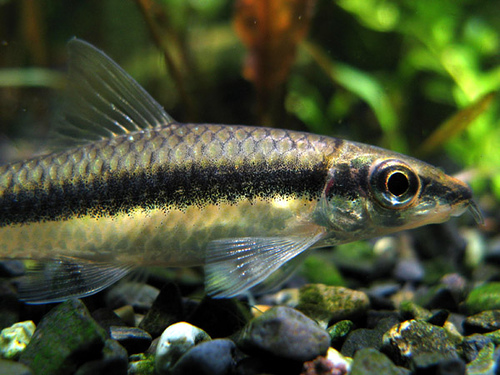
Siamese algae eaters, Crossocheilus siamensis, belong to the familyCyprinidae more commonly referred to as the carp family. These bottom-dwelling algae eaters are not to be confused with the Chinese algae eater or plecostomus, two other popular varieties of algae eaters among freshwater aquarium owners. The Siamese algae eater is indigenous to the main lands of Southeast Asia including the Mekong and Chao Phraya River Basins. They inhabit streams and rivers and will spread into flooded out lowland jungle areas of the Malay Peninsula during the rainy season. Siamese algae eater are a medium sized member of the carp family. These fish generally reach a maximum adult length of 6 inches in an aquarium setting. They have slender torpedo shaped bodies with transparent fins. These fish have silver color palettes with a single horizontal stripe beginning in front of their eyes and terminating at the base of the caudal fin. Siamese algae eaters have a double set of barbels. Barbles are a distinguishing characteristic of the carp family. Siamese algae eaters are also marketed under the aquarium trade names Indian algae eater, Siamese headbreather, sucker loach, sucking loach, and biforated carp.

Algae Eater

Algae Eater

Algae Eater

Algae Eater

Algae Eater

Algae Eater

Algae Eater

Algae Eater

Algae Eater
Algae Eater

Algae Eater

Algae Eater

Algae Eater
Algae Eater

Algae Eater

Algae Eater

Algae Eater

  Alfonsino

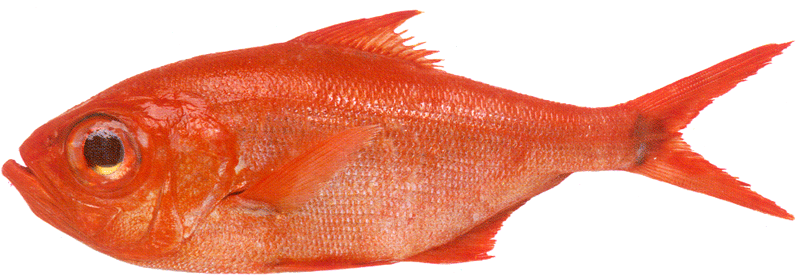
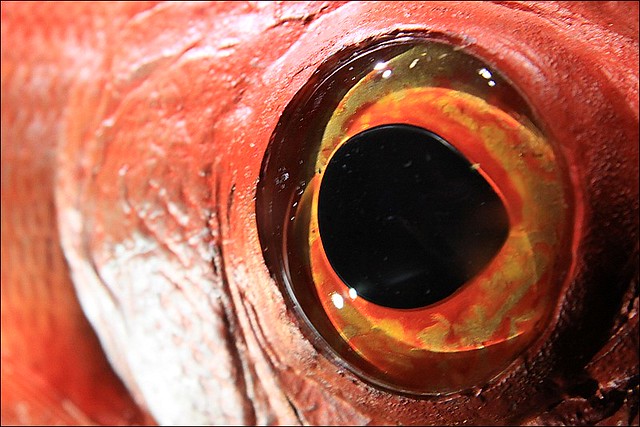
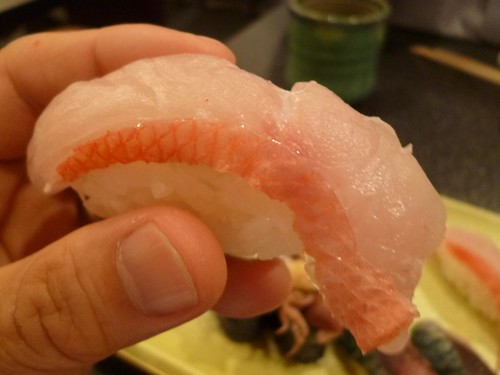
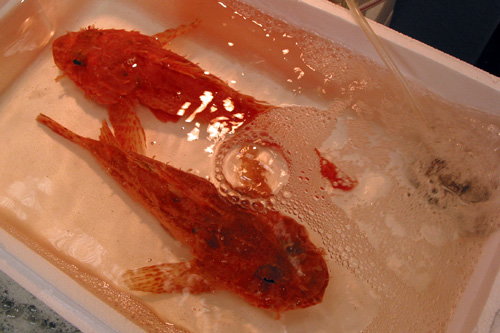
Alternative Name/s Alfonsino, Longfinned Beryx, Red Bream Identification The Imperador has a deep compressed body. It has a single short-based dorsal fin. The anal fin has a much longer base and originates below the middle of the dorsal fin. The caudal fin is forked. The species has very large eyes, a large oblique mouth and small ctenoid scales. It is red to pink sometimes shading to a silvery pink below. Size range It grows to 60 cm in length. Distribution The species occurs in most temperate and tropical marine waters worldwide, with the exception of the north-eastern Pacific. In Australia it is known from off northern New South Wales to south-eastern Tasmania.

 Alfonsino

 Alfonsino

 Alfonsino

 Alfonsino

 Alfonsino

 Alfonsino

 Alfonsino

 Alfonsino

 Alfonsino

 Alfonsino

 Alfonsino

 Alfonsino

 Alfonsino

 Alfonsino

 Alfonsino

 Alfonsino

 Alfonsino

Alewife

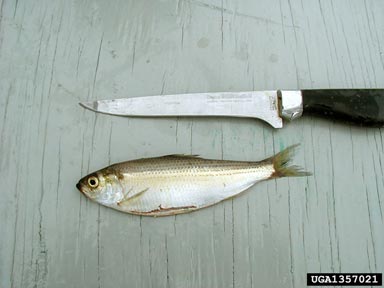
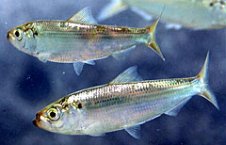
The alewife is a small herring having a greenish to bluish back and silvery sides with faint dark stripes. Although this species is overshadowed by other herring species in the marine environment, alewife are a key player in many freshwater lakes within which they have been introduced -- particularly the Great Lakes. Freshwater alewives, sometimes called sawbellys, are important as prey for popular game fish such as salmon and trout. They are extremely abundant in the Great Lakes, and are often regarded as a nuisance when large masses of these fish wash up on shorelines following large spring die-offs. Currently, alewives are a key player in a mysterious thiamine deficiency syndrome that has caused widespread reproductive failure in key native salmonine fishes, such as lake trout and Atlantic salmon. Alewives often contain thiaminase, which is an enzyme that causes thiamine deficiency in predators that eat alewives, yet mysteriously, alewives do not suffer from this thiamine deficiency. Ongoing research studies are underway to determine factors responsible for development of the thiamine deficiency syndrome.
Alewife

Alewife

Alewife

Alewife

Alewife

Alewife

Alewife

Alewife

Alewife

Alewife

Alewife

Alewife

Alewife

Alewife

Alewife

Alewife

Alewife

Albacore

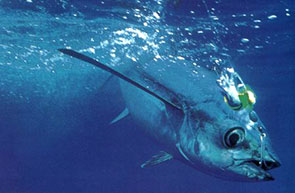
Oregon albacore is a young Pacific albacore tuna. It is a highly migratory fish that swims in schools along the West Coast shores of the U.S during summer and into the late fall. Pacific albacore are typically juvenile in age (three to five years) when passing through Oregon Ocean waters. Pacific albacore are hatched in the subtropical waters of the Pacific Ocean from March through July. They then begin an expansive migration in the spring and early summer starting in the waters off Japan. They continue their journey through the late summer into the inshore waters off the western coast of the United States. Finally they head further west out into the Pacific Ocean where they end their annual journey. Pacific albacore have a rapid growth rate. The eggs are hatched within 24 to 48 hours from the time they start developing. The juveniles will grow at an estimated rate of 1.23 inches per month. As they mature the growth rate slows. Their habitat is heavily dependent on the temperature of the water, but generally young fish are often found near the top of the Ocean where as adults are found at least 1,250 feet deep.

 Albacore

Albacore

Albacore

Albacore

Albacore

Albacore

Albacore

Albacore

Albacore

Albacore

Albacore

Albacore

Albacore

Albacore

Albacore

Albacore

Albacore